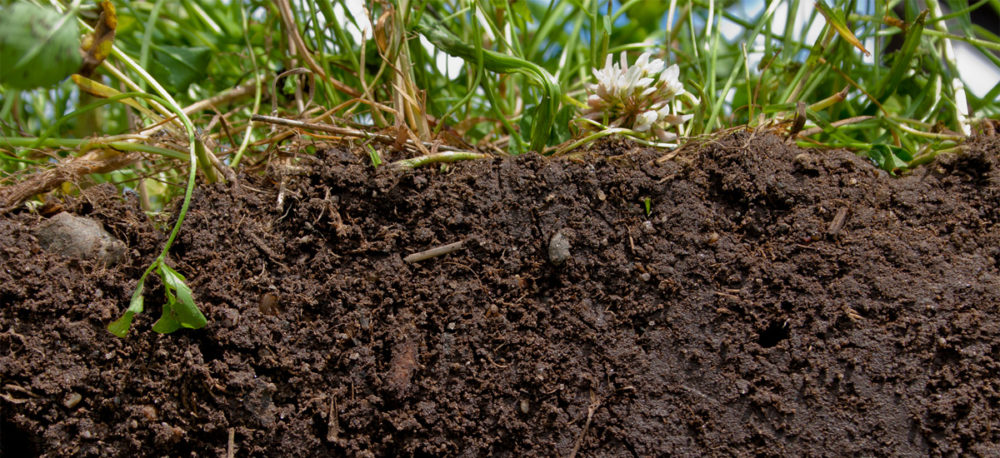
Soils play a critical role in the global carbon cycle, acting as the largest natural active carbon sink on continental surfaces[1], storing approximately 2,500 Gt of carbon. In comparison, the atmosphere holds about 760 Gt, while terrestrial vegetation (biotic carbon) stores around 560 Gt[2]. According to the Food and Agriculture Organization (FAO), soil is a « complex matrix of interacting components: mineral particles, air, water, organic matter, and living organisms. » Among these, Soil Organic Carbon (SOC) is a key component, referring only to the carbon component of organic compounds, which influences soil fertility and its ability to store carbon.
Agricultural lands, which cover 37% of the world’s land surface[3], have significant potential for carbon sequestration—estimated at 2 to 5 gigatons of CO2 per year[4]. However, soil degradation is a growing concern, with 20% to 40% of land globally considered degraded as of 2022[5]. This degradation undermines the land’s capacity to sustain life, crops, and ecosystems, largely due to intensive agricultural practices that have depleted organic matter over the past 50 years.
The good news is that soil degradation is reversible. Through improved land management, we can restore soil health, increase SOC levels, and transform agriculture into a powerful tool for combating climate change.
IALM Practices: A Nature-Based Solution
Integrated Agricultural and Land Management (IALM) practices are a cornerstone of sustainable agriculture. These practices aim to optimize yields while preserving biodiversity and increasing carbon sequestration in soils.
Key IALM practices include:
Reduced Tillage: Minimizing soil disturbance to maintain its structure and protect carbon stored in deeper layers.
Crop Rotation: Alternating crops to prevent nutrient depletion and control pests.
Cover Cropping: Growing temporary crops to reduce erosion, improve soil structure, and add organic matter.
Composting and Organic Additions: Enriching soils with organic material to enhance fertility and moisture retention.
Grazing Management: Regulating grazing intensity to promote soil regeneration and prevent overgrazing.
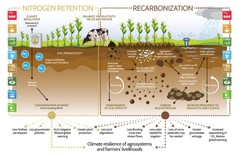
These practices not only enhance yield productivity, permanency and soil resilience against climate change but also reduce greenhouse gas emissions, contributing significantly to climate mitigation efforts.
To unlock the full potential of SOC and IALM practices, carbon finance must play a central role. By assigning monetary value to carbon sequestration, carbon markets incentivize sustainable soil management and improve livelihoods of the farmers in all countries. McKinsey’s studies emphasize that adopting regenerative agriculture practices on U.S. corn and soy farms—some of the largest crops in the country—could not only reduce the environmental impact of the industry but also offer promising financial returns for most farmers nationwide, generating an average of $20 to $60 per acre annually over the first ten years.[6]
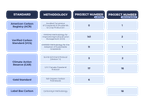
Several established standards, such as VCS and Gold Standard, offer methodologies tailored to soil carbon projects. These frameworks enable landowners and farmers to quantify and monetize their efforts in restoring degraded lands, creating tradable carbon credits. However, challenges remain, including the need for robust remote monitoring systems, the high cost of soil analysis at date, and ensuring equitable access for small-scale farmers.
Source from Berkeley Voluntary Registry Offsets Database – v2024-08-31 (adjusted with updates from the author)
Compared to other Nature-Based Solutions methodologies, such as Afforestation, Reforestation, and Revegetation (ARR), IALM methodologies still have a relatively recent track record. In fact, the VCS – the leading standard for AFOLU projects – currently lists only two regenerative agriculture projects with emitted carbon credits. However, the first verification of VM0042 for the Involtor project in Romania serves as a significant indicator that a new trend is emerging.
To conclude
Soil restoration is an environmental imperative, which must be supported by carbon finance. Healthy soils foster sustainable livelihoods by improving food and water security, increasing incomes, and building resilience to climate change.
Sources
[1] Dignac, M.-F., Derrien, D., Barré, P., Barot, S., Cécillon, L., Chenu, C., Chevallier, T., Freschet, G., Garnier, P., Guenet, B., Hedde, M., Klumpp, K., Lashermes, G., Maron, P.-A., Nunan, N., Roumet, C., & Basile-Doelsch, I. « Increasing Soil Carbon Storage: Mechanisms, Effects of Agricultural Practices, and Proxies. A Review. » Agronomy for Sustainable Development, vol. 37, 2017. DOI : 10.1007/s13593-017-0421-2.
[2] Ciro Gardi, Stefano Brenna, Silvia Solaro, Mauro Piazzi, Fabio Petrella, “The Carbon Sequestration Potential of Soils: Some Data from Northern Italian Regions”, Italian Journal of Agronomy, 2006. https://doi.org/10.4081/ija.2007.135
[4] Paustian, K., Larson, E., Kent, J., Marx, E., & Swan, A. « Soil C Sequestration as a Biological Negative Emission Strategy. » Frontiers in Climate. Vol. 1, Article 8, 2019. DOI : 10.3389/fclim.2019.00008.
[5] UNCCD. Global Land Outlook: Second Edition, Summary for Decision Makers. 2022, p. 6.
[6] Owen Stockdale, Pradeep Prabhala, Tom Brennan, Rui Chen, “Revitalizing fields and balance sheets through regenerative farming”, McKinsey & Company, 2024. https://www.mckinsey.com.br/industries/agriculture/our-insights/revitalizing-fields-and-balance-sheets-through-regenerative-farming.
Article written by :
Origination & Partnerships Project Manager - South America